Our 100 kilometer journey began early in the morning on December 22, 2024, leaving the town of Camporrobles at 8 a.m. The route ahead would first take us through a landscape marked by the recent devastation wrought by nature and exacerbated by the historical human interaction and intervention in that landscape. As we passed through the towns of Utiel, San Antonio, and Requena, it was hard to ignore the lingering effects of the major flooding that had recently struck the region. Some called it a “500-year storm,” a once-in-many-lifetimes event leaving physical destruction behind—damaged roads, flooded fields, and displaced communities. This put us in a different mental space, one in which the forces of nature felt omnipresent, unrelenting, and deeply transformative. One in which we felt the longer cycles of time.
As we moved further south and east, the landscape began to shift. We passed by Los Pedrones, Venta Gaeta, Dos Aguas, and Millares, towns not affected by the devastation but each one carrying its own history, its own scars from the past, and its own relationship with the land. And then we arrived in Bicorp—Valencia’s 2024 Cultural Capital—excited to see how the even more distant past and present intersect in this region. Here, we were introduced to the Ecomuseum, the gateway to a deeper exploration of the cultural and ecological history of the area and our first on-site discussions of the Honey Gatherer.
Upon entering the Ecomuseum, we were greeted by the permanent exhibition—a space that offered us a chance to connect with the history of the land and the communities who had lived and worked here for millennia. A place where the natural world, human history, and the art of our ancestors intertwined. Here are the different panels:
Museos al Aire Libre (Open-Air Museums)
This panel covers the discovery of regional rock art, starting with the 1911 finds at Abrigo de Tortosillas. It outlines the historical development of archaeological exploration, leading to the creation of open-air museums that display the rock art. The panel connects the Cuevas de la Araña site to a broader cultural heritage, illustrating how these artworks help us understand prehistoric land use and ancient lifestyles.
La Prehistoria del Territorio (The Prehistory of the Territory)
This section highlights the geological and ecological significance of the Cuevas de la Araña area. It details the natural resources that shaped early human life and the distribution of prehistoric settlements. The panel emphasizes the connection between human activity and the landscape, including rivers, cliffs, and ravines, while also mentioning the hunting and gathering practices influenced by the environment.
El Arte Levantino (The Levantine Art)
This panel introduces Levantine art, known for its depictions of animals and human figures in dynamic scenes. The art at Cuevas de la Araña reflects the cultural importance of hunting and gathering, and is attributed to the Neolithic period. These representations offer insight into prehistoric spiritual and artistic practices.
Balsa de Calicanto
This panel describes the Balsa de Calicanto site in Bicorp, showcasing Levantine rock art, including images of deer, wild goats, and a wild horse. These engravings highlight the interactions between humans and their environment, offering a glimpse into the cultural practices and relationship with the landscape.
Cuevas de la Araña
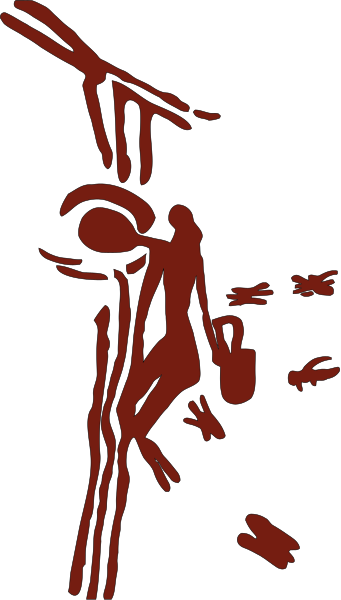
Dedicated to the Cuevas de la Araña site, this panel details the rock art found within the caves, particularly scenes of honey gathering. It emphasizes the social and spiritual practices depicted, showing how art reflected daily life and rituals. The panel also explores the connection between humans, their environment, and culture in the context of Levantine art.
La Conservación del Arte Rupestre (Conservation of Rock Art)
This section discusses efforts to preserve the rock art at Cuevas de la Araña and other local sites, highlighting threats such as weathering and vandalism. It emphasizes UNESCO’s role in protecting these sites, with a focus on conservation programs and public education aimed at preserving these cultural treasures for future generations.
Curatorial Choices and Contemporary Interpretations
The Cuevas de la Araña rock art provides a unique opportunity to engage with prehistoric human-environment interactions, symbolisms, and cultural practices. The museum’s presentation of this rock art shapes contemporary understandings of its cultural, historical, and ecological significance. In what ways does the museum presentation of the Cuevas de la Araña rock art shape contemporary interpretations of its cultural and ecological significance? This critical question examines how curatorial choices influence modern interpretations of the site’s symbolism, its historical context, and the ecological relationships between humans and bees. Through this discussion, we also aim to highlight the questions and implications that emerge for us as we prepare for our visit to the site.
Un enfoque crítico desde el género y la espiritualidad
Como historiadora del arte, mi interpretación del panel sobre la Cuevas de la Araña comienza desde una perspectiva crítica que reflexiona sobre el poder y los roles de género que subyacen en las representaciones artísticas. El panel de Arte Levantino presenta una visión bastante convencional del arte rupestre, enfocándose en las representaciones de actividades cotidianas, como la caza y la recolección. Sin embargo, estas interpretaciones no logran captar la dimensión más profunda del arte prehistórico, en especial su vínculo con el ritual y la espiritualidad.
Al observar la escena de recolección de miel, me encuentro con una omisión significativa: la posible presencia de figuras femeninas. El museo, al centrarse en los aspectos más funcionales de las imágenes, ignora el hecho de que muchas culturas prehistóricas vinculaban a las mujeres con tareas de recolección, mientras que los hombres se asociaban más a menudo con la caza. La figura humana que aparece en esta escena de recolección de miel podría ser una mujer, dada la tradición histórica que asocia a las mujeres con las tareas de recolección. Sin embargo, el museo no aborda esta posibilidad, lo que subraya una tendencia a invisibilizar el papel de las mujeres en las actividades representadas.
Además, esta limitación se extiende más allá de las representaciones de género. El arte levantino, especialmente en el contexto de Cuevas de la Araña, tiene una dimensión espiritual que el museo no desarrolla. El proceso de recolección de miel, que en este contexto es físicamente exigente (subir por los acantilados), no solo debe entenderse como una actividad de subsistencia, sino como una práctica ritual ligada a las creencias espirituales de la comunidad. El museo no ofrece esta interpretación, y esto omite el valor simbólico que la recolección de miel podría tener en términos de fertilidad, transformación, y divinidad, elementos que son comunes en muchas culturas prehistóricas.
Así, el arte levantino no solo refleja la vida cotidiana, sino que actúa en la configuración de identidades, roles de poder y cosmovisiones. El museo, sin embargo, se limita a una visión estática de estas representaciones, sin vincularlas con sus posibles implicaciones rituales o espirituales. Por tanto, la narrativa de género y espiritualidad en el arte debe ser reconsiderada para ofrecer una interpretación más completa y crítica de la Cuevas de la Araña.
Human-Environment Interactions and Territoriality
From my perspective as a cultural geographer, the Cuevas de la Araña rock art is presented in a way that highlights the ecological and geographical elements of the site. The museum does a commendable job of situating the rock art within the context of its physical surroundings—the cliffs, ravines, and rivers—yet fails to engage with the dynamic relationship that must have existed between humans and their environment. The landscape is treated almost as a passive backdrop for human activity rather than an active participant in shaping the social and spiritual practices of the people who created the art.
For example, the challenging act of climbing cliffs to gather honey is presented simply as a pragmatic task, without acknowledging the symbolic significance that such a practice might have had. The ascent could have represented a spiritual journey, a rite of passage, or an ascent to the divine. The museum misses this layer of meaning, which reduces the landscape to merely a physical space that humans interacted with, ignoring its potential as a symbolically charged space that shaped human behaviors and rituals.
Moreover, the territoriality of honey gathering—perhaps connected to rights over specific areas or social divisions of labor—is overlooked. The rock art may reflect more than the labor involved in honey collection; it could also be a record of how early societies organized their territories and resources. The museum’s focus on the ecological aspects of the site, such as the biodiversity surrounding the Cuevas de la Araña, fails to explore the cultural significance of these resources and the spatial dynamics of ancient communities. Were these spaces marked by territorial divisions? Were there hierarchies associated with who could gather honey from certain areas? These are critical questions left unaddressed by the curatorial approach.
The museum’s framing of the landscape also lacks an engagement with how these practices could have influenced modern conservation and ecological thinking. In today’s context, the decline of bee populations has led to increasing concerns over environmental sustainability. The rock art from Cuevas de la Araña provides an opportunity to reflect on how early communities might have had a more sustainable relationship with their environment compared to modern industrialized practices. Unfortunately, this dimension of the rock art’s ecological significance is left largely unexplored.
Emerging Questions and Critical Insights
The combination of the art historian’s and cultural geographer’s critiques raises several questions and issues that could deepen the understanding of the Cuevas de la Araña rock art from experiencing the permanent exhibition at the Ecomuseum. Both perspectives emphasize the limitations in the museum’s presentation of the rock art, particularly in its treatment of gender, ritual, territoriality, and human-environment interactions. Some of the key questions that emerge from this critique are:
-
How might the museum reinterpret the role of gender in prehistoric practices? The absence of a deeper exploration of female roles in activities like honey gathering overlooks significant aspects of gendered labor and spirituality in ancient societies.
-
What are the spiritual and symbolic dimensions of the rock art? The museum’s failure to discuss the ritualistic nature of honey gathering and its potential connection to spiritual practices leaves a gap in understanding the full significance of the imagery.
-
What is the relationship between humans and the environment as depicted in the rock art? The territorial implications of the rock art and its connection to resource management are underexplored, limiting our understanding of how these practices shaped social structures in prehistoric communities.
-
How can the museum connect modern ecological concerns to the practices represented in the rock art? The museum could address how the sustainable practices of ancient societies might inform contemporary conservation efforts and promote a more interdisciplinary dialogue between past and present ecological issues.
Broadening the Narrative
In summary, the Cuevas de la Araña rock art is a complex and multi-dimensional cultural artifact that could offer deep insights into prehistoric gender roles, ritual practices, social organization, and human-environment relationships. However, the museum’s curatorial choices limit the scope of these interpretations by focusing predominantly on the pragmatic, historical, and material aspects of the rock art. To offer a more complete understanding, the museum should adopt an interdisciplinary approach that incorporates gender analysis, ritual studies, and a deeper exploration of the symbolic dimensions of the art, alongside a more nuanced engagement with the human-environment interactions that these depictions represent.
By doing so, the museum could enrich the visitor’s experience, enabling them to see the Cuevas de la Araña rock art not only as a historical record but as a living, dynamic practice that connects the past to the present, with profound implications for modern ecological and cultural practices.
Drive to the Caves
The Land Rover Defender is a rugged and iconic off-road vehicle, known for its boxy design, exceptional durability, and ability to handle the toughest terrains. With a rich history spanning several decades, it has become a symbol of adventure, often seen outfitted with roof racks and other gear for overlanding and exploration. 10 kilometers.
Exploring Social Organization, Gender Roles, and Symbolism
In our ongoing exploration of the rock art at Cuevas de la Araña, we return to two guiding questions that have shaped our investigation into the relationships between ancient communities and their environment. These questions—To what extent do the rock art depictions of honey gathering suggest social organization, territorial practices, or gender roles within the community? and To what extent do the symbolic representations of bees, honey, and the act of honey gathering convey broader cultural values or beliefs?—offer a critical lens through which we can understand the multifaceted significance of the art and its connection to the broader social, spiritual, and ecological contexts of prehistoric life.
Social Organization, Territorial Practices, and Gender Roles: Interpreting the Depictions
The first of these questions invites us to consider whether the rock art provides insights into the social structure, territoriality, and gendered roles within the community. During our conversation with the guide, we learned about the landscape’s continuity over thousands of years—how it has remained largely unchanged in its essential features, such as the pine forests and the river running below the site. This continuity in the environment is important for understanding how the land shaped the social practices of the people who lived here.
The guide emphasized the idea that the site of Cuevas de la Araña was likely part of a network of sites used by local, non-nomadic communities. These groups were deeply connected to the land, organizing their subsistence practices within the fixed territory around the cave. The site may have been part of a larger ritual calendar, tying seasonal movements, hunting, and gathering to specific locations across the landscape. These activities suggest a highly organized approach to land use, with specific territories or pathways designated for certain tasks, such as honey gathering, which might have been a collective or seasonal effort.
What stood out in our discussion was the guide’s comparison of the lifestyle of her grandfather, who lived a semi-nomadic life in the early 20th century, to the Neolithic people who might have created the art. The guide argued that her grandfather’s way of life—walking several hours to his fields, living there during the week, and returning home on weekends—bore more resemblance to the Neolithic practices than to those of the Paleolithic, who were more mobile. This comparison allowed us to think about how early Neolithic communities, like the one at Cuevas de la Araña, might have organized their daily and seasonal rhythms around the landscape in a similarly structured way, supporting their subsistence activities like honey gathering through territorial management.
In terms of gender roles, the question of whether the honey gatherer depicted in the art is male or female became a pivotal point in our conversation. The guide supported the contemporary interpretation that the figure in the rock art is a woman, challenging the long-held assumption that the depiction was of a man, an assumption made by early archaeologists such as Hernández Pacheco. This perspective aligns with current research, which recognizes the central role of women in many resource-gathering activities in prehistoric societies. The possibility that the gatherer is a woman opens up questions about the gendered division of labor in ancient communities. If the honey gatherer is indeed female, it suggests that women were deeply involved in not just subsistence tasks but also in the ritual and spiritual dimensions of honey gathering, a practice often linked to fertility and divine favor in ancient cultures.
Symbolic Meanings of Bees, Honey, and the Act of Gathering
The second guiding question—To what extent do the symbolic representations of bees, honey, and the act of honey gathering convey broader cultural values or beliefs?—takes us beyond the functional aspects of the rock art to explore its symbolic and spiritual significance. The guide’s observations about the landscape and its symbolic importance bring us back to the idea that the rock art was not just a depiction of everyday life but a representation of deeper cultural beliefs. The presence of bees and the act of honey gathering likely held symbolic meaning beyond the practical needs of subsistence.
Honey has long been associated with fertility, transformation, and the divine in many ancient cultures. It is possible that the act of gathering honey from the cliffs was seen as a spiritual or ritualistic activity, tied to the broader cosmology of the people. The difficult task of climbing cliffs to access the hives may have had symbolic significance, perhaps representing an ascent to a higher spiritual plane or an act of communion with the divine forces that governed the natural world. The guide’s mention of the site as a possible pilgrimage for modern beekeepers and those interested in natural beekeeping connects the practice of honey gathering with a larger spiritual tradition, one that transcends the material aspects of the task.
If the bees were symbolic of fertility and transformation, their role in the rock art could also be seen as a link between the human and divine realms. The honey gathered by the ancient people might not have simply been for sustenance, but also for ceremonial purposes. It is possible that honey was used in rituals, as an offering to the gods, or even as a means of connecting with the cycles of nature. The rock art may have served not only as a record of these practices but also as a means of reinforcing the cultural and spiritual identity of the community.
The Challenge of Presentism
One of the primary challenges in interpreting prehistoric rock art is what’s known as “presentism,” which refers to the tendency to view past cultures through the lens of our modern understanding. In this case, it would be easy to assume that the animals depicted in the art—deer, goats, and perhaps even the bees—were perceived in much the same way they are in our contemporary worldview: as real, tangible animals with specific ecological roles. However, such a straightforward reading may miss the deeper layers of meaning embedded in the rock art, particularly if these animals held symbolic or spiritual significance that differs from how we view them today.
For example, in many ancient cultures, animals were not just physical creatures but also carriers of symbolic meaning. Deer, goats, and other animals might have been associated with fertility, strength, or the divine, and these associations would have shaped how the community interacted with them. The act of hunting or gathering might not have been simply about procuring food, but also about engaging in a ritualistic practice that connected humans with the natural and spiritual worlds.
Emerging Questions
From our dialogue with the guide and the insights gathered on site, several important questions emerge:
-
To what extent does the representation of honey gathering suggest a ritualistic or spiritual practice, rather than just a subsistence activity? This question challenges us to reconsider the meaning of the rock art, seeing it as more than a simple depiction of daily life, and instead as a complex expression of spiritual and cultural values.
-
How does the landscape, particularly the presence of water and the difficult terrain, influence the social organization of the community? The relationship between the environment and the organization of subsistence practices like honey gathering may provide insights into how territoriality and resource management were structured in this community.
-
What is the significance of gender in the depiction of the honey gatherer? The possibility that the gatherer is a woman raises important questions about the gendered division of labor and the roles that women played in both practical and spiritual aspects of prehistoric life.
-
How do the symbolic meanings of bees, honey, and the act of gathering influence our interpretation of the rock art? The presence of bees in the rock art likely extends beyond mere representation of an insect and may have spiritual or symbolic associations that reflect broader cultural beliefs about fertility, transformation, and the divine.
The rock art at Cuevas de la Araña provides valuable insights into the social structure, territorial practices, and gender roles of the ancient communities who created it. By asking these guiding questions and reflecting on the landscape, symbolism, and gender dynamics of the site, we can begin to understand the deeper layers of meaning embedded in the art. The presence of women as honey gatherers, the ritualistic nature of the activity, and the symbolic role of bees suggest that the rock art was not merely a record of subsistence but a complex cultural and spiritual expression. These reflections challenge us to reconsider our understanding of the past and offer a richer, more nuanced interpretation of the rock art at Cuevas de la Araña.
Honey Gathering: A Performative Approach
In our ongoing exploration of the Cuevas de la Araña rock art, we find ourselves drawn to a question that lies at the heart of our inquiry: In what ways can the physical reenactment of honey gathering enhance our understanding of the practices depicted in rock art? By reenacting the depicted actions, this question invites us to engage physically with the site, providing deeper insights into the labor, tools, and techniques involved in honey gathering, and enriching our understanding of the cultural context in which these practices took place.
As we consider returning to the area near and around the site (if and when we find wild bees) and performing this reenactment, we begin by imagining the necessary tools—protective gloves, a ladder, a basket, and cables or ropes. These would serve as stand-ins for the tools that might have been used by ancient gatherers, such as ropes or cords depicted in the rock art. The first step in the reenactment would involve selecting a cliff face, much like the ones shown in the artwork, and attempting to climb it using the ladder and ropes. The physical effort required to scale the rocks would give us immediate insight into the challenges faced by ancient gatherers. How did the body move in relation to the landscape? What did it feel like to balance on a narrow ledge, high above the valley floor, just to reach the hive?
The basket, too, would play a central role in the reenactment. As we collect the honey, we would mirror the action of the figures depicted in the art, perhaps understanding how this seemingly simple act might have held symbolic or spiritual significance. The basket would not merely serve a functional purpose; it would connect us directly to the human figures in the art, enhancing our understanding of how the act of collecting honey was intertwined with both physical labor and potential ritual.
The landscape itself would become an active participant in this reenactment. Far from being a passive backdrop, the rugged terrain of the Cuevas de la Araña would influence our experience of the past. The steep climb, the buzzing of bees, and the expansive view over the valley would remind us of the relationship that ancient people had with their environment—not just as a resource, but as something that held deeper meanings, perhaps tied to spiritual or communal practices. Was the physical challenge of gathering honey seen as a rite of passage, a spiritual ascent, or a communion with the divine? These are the kinds of questions we would explore through the act of reenactment.
The goal of this performance would not be to replicate the ancient practice exactly, but to reimagine it through our bodies. The reenactment would be about uncovering hidden dimensions of the practice—its rhythm, its challenge, its meaning—and seeing how these elements might have shaped the rock art itself. By physically engaging with the site, we would move beyond theoretical interpretations and gain a more visceral understanding of the cultural, social, and spiritual dimensions of honey gathering.
Emerging Questions
As we reflect on the potential reenactment of honey gathering, several important questions emerge:
- How does physically engaging with the site through honey gathering reveal hidden dimensions of the rock art, such as symbolic or spiritual significance?
- What deeper understanding can we gain by reenacting the actions depicted in the rock art, moving beyond a functional interpretation to a more embodied and experiential understanding of the practice?
- Was honey gathering a purely practical task, or did it carry ritualistic significance?
- Did the act of climbing cliffs and gathering honey represent a spiritual ascent or connection to the divine?
- How might the landscape itself have been viewed as an active participant in honey gathering practices, rather than just a backdrop for human activity?
- What role did the tools, such as the basket, ladder, and ropes, play in connecting us to the past, and how might their use influence our understanding of the practice of honey gathering?
- How can the act of reenacting the process help us understand the cultural and social dynamics at play, such as territoriality or social organization, in the ancient community?
In this hypothetical reenactment, we would deepen our understanding of the honey gathering process depicted in the rock art. The experience would allow us to move beyond theoretical interpretations to a more physical, embodied understanding of ancient practices. This process would help us connect with the past in a way that purely analytical methods cannot, revealing new insights into the spiritual, social, and ecological dimensions of life at the Cuevas de la Araña.
Ancient Honey Gathering and Modern Beekeeping
As we consider the role of honey gathering depicted in the rock art at Cuevas de la Araña, one of the most intriguing questions to emerge is: What are we doing in the 21st century when we say that rock art depictions of honey gathering suggest a call for natural beekeeping practices? This question challenges us to reflect on the implications of interpreting ancient rock art as advocating for modern beekeeping practices. How do we, as contemporary observers, link the ancient practice of honey gathering to modern concepts of ecological sustainability, particularly in light of the current challenges facing honeybees and the environment?
Interpreting Ancient Practices for Contemporary Beekeeping
The idea that ancient rock art might offer lessons for contemporary beekeeping stems from the assumption that ancient humans, in their interactions with the land and nature, may have practiced a form of beekeeping that was more in harmony with the natural rhythms of the environment. The rock art at Cuevas de la Araña, which likely depicts the practice of honey gathering from wild hives, provides us with a glimpse into a pre-agricultural, subsistence-based approach to working with bees. This model of beekeeping was fundamentally different from the industrialized, commercial practices that dominate today’s beekeeping industry.
What might it mean for modern beekeeping practices to look to the past for inspiration? The ancient depictions of honey gathering, where humans climbed cliffs to access wild hives, suggest a more intimate and sustainable relationship between humans and bees. It is important to note that these depictions are not just of honey harvesting; they show humans engaging in a practice that likely had deep cultural and spiritual significance. The bees were not simply a resource; they were part of a larger ecological and spiritual framework. This raises important questions about how our modern practices might deviate from these ancient approaches and whether there is value in revisiting those methods today.
The Concept of “Letting Bees Be Bees”
One key phrase that has emerged in modern discussions about beekeeping is the idea of “letting bees be bees.” This concept suggests a more natural approach to beekeeping, where bees are allowed to follow their natural behavior and rhythms, without excessive human intervention. In contrast to the industrial approach, which often involves managing bee populations for maximum honey production, this “hands-off” philosophy emphasizes bee welfare and ecological sustainability.
Looking at the rock art, the act of honey gathering seems to reflect this very ethos. The ancient gatherers did not manipulate or domesticate bees in the way modern beekeepers often do. Instead, they harvested honey from wild hives, interacting with the bees in a way that respected their natural behavior. The physicality of climbing cliffs, accessing hives, and working with the bees in their natural environment suggests that the relationship between humans and bees was less about control and more about coexistence.
As we reflect on this, we must ask: What can we learn from this ancient practice that could inform modern beekeeping methods? Can we apply the principles of less intervention and greater respect for natural processes in our modern beekeeping practices? In an era when bee populations are in decline, and industrialized beekeeping practices are often criticized for their harm to bee health, looking to the past for inspiration may offer valuable insights.
Emerging Questions
Reflecting on this question, several important questions emerge:
-
How can the ancient practice of honey gathering inform modern ecological sustainability efforts? What specific aspects of the ancient practice—such as less intervention and a focus on natural processes—can be applied to modern beekeeping to promote bee welfare and environmental sustainability?
-
To what extent are we romanticizing the past by suggesting that ancient practices offer direct lessons for modern beekeeping? How do we navigate the complexities of interpreting ancient practices in a contemporary context?
-
What role can modern beekeepers play in reversing the decline of bee populations, and how can lessons from the past guide these efforts? How does the modern practice of “letting bees be bees” align with ancient methods, and how can it shape the future of beekeeping?
-
How does the symbolic and spiritual significance of honey gathering in ancient rock art influence our understanding of bees and beekeeping today? How can we balance the ecological, symbolic, and spiritual aspects of the ancient practice in our modern interpretation?
The rock art at Cuevas de la Araña offers us a unique opportunity to reflect on the relationship between humans and bees, both in the past and in the present. While ancient honey gathering practices were deeply embedded in cultural, spiritual, and ecological contexts, they also provide us with important lessons for contemporary beekeeping. By revisiting these practices, we can explore the possibilities of a more sustainable, “natural” approach to beekeeping that prioritizes the health of bees and the environment. However, we must also acknowledge the complexities of projecting ancient practices onto modern life and remain mindful of the broader cultural and spiritual dimensions of the past that shaped these practices. Ultimately, the rock art serves as both a historical document and a source of inspiration, offering insights that can help guide us in addressing the ecological challenges of the present.
Final Notes
Reflecting on our journey to Bicorp, the Ecomuseum, and the Cuevas de la Araña, it becomes clear that the rock art at this site offers far more than just a glimpse into prehistoric life; it is a portal into the complex relationships between humans, nature, and spirituality. The artwork, particularly the depictions of honey gathering, challenges us to rethink how we view ancient practices and their relevance to modern times. Through the museum’s curated panels, we explored the historical, ecological, and cultural contexts of the rock art, but we also found critical gaps in how the museum interprets these symbols and rituals. Issues of gender, spirituality, and territoriality were often overlooked or oversimplified, leaving much to be explored about the deeper meaning behind these ancient practices.
Our critical dialogue with the guide, the museum’s curatorial choices, and the (hypothetical) physical reenactment of honey gathering all brought us closer to understanding the multifaceted nature of the art. The presence of women as honey gatherers in the rock art, as well as the ritualistic potential of honey collection, suggests a profound connection between labor, gender roles, and spirituality that remains largely unexplored in the museum’s representation. Additionally, the land itself plays an active role in this story. It’s not just the backdrop for human activity—it is integral to the social and spiritual practices of the people who inhabited this landscape, deeply shaping how they interacted with their environment.
The hypothetical reenactment of honey gathering, though not yet performed, reveals the importance of physical engagement with the land to unlock further understanding of ancient practices. By reenacting the labor of honey gathering, we would better grasp the challenges faced by ancient people, not just in terms of physical effort, but also in how those challenges might have carried spiritual or ritual significance. This physical connection to the past, through our tools and movements, would allow us to bridge the gap between historical artifact and lived experience.
Perhaps most intriguingly, the ancient practices depicted in the rock art of Cuevas de la Araña prompt us to reconsider how these practices can inform modern beekeeping. The idea of “letting bees be bees,” as seen in the ancient honey gathering process, offers a sustainable, respectful model for interacting with bees and the environment today. This philosophical approach contrasts with modern industrial beekeeping methods, which often prioritize productivity over ecological balance. As we face the ecological challenges of the 21st century, particularly the decline in bee populations, we must ask ourselves how the lessons of the past can guide our future practices—both in beekeeping and in broader environmental sustainability efforts.
The site itself has taken on a unique significance in the modern era, becoming something of a pilgrimage for beekeepers and those interested in natural beekeeping practices. As the guide mentioned, the Cuevas de la Araña site serves as a point of connection for those who wish to better understand the ancient mysteries of honey gathering, especially in the context of working harmoniously with nature. For contemporary beekeepers, visiting this site can feel like a spiritual journey—one that links the practice of beekeeping to its ancient roots and to the broader cultural and ecological wisdom embedded in the land.
In conclusion, the rock art at Cuevas de la Araña serves as both a historical document and a call to action. It invites us to think deeply about the relationships we have with the land, with bees, and with one another. By revisiting ancient practices with an open mind, we not only honor the wisdom embedded in the art but also bring new insights to our current environmental and cultural challenges. Through this exploration, we are reminded that the past is not a distant, disconnected world—it is a source of knowledge, resilience, and guidance for the present and the future.



 This report, the third in a series of five reports, explores the distinct lenses we will employ while examining the rock art at the
You must be logged in to post a comment.